Key Takeaways
Focus on building valuable skills and character instead of chasing superficial success.
Opportunity often arrives naturally after thorough preparation and personal growth.
AI should be used to enhance learning, not replace human effort and critical thinking.
Relationships should be mutually beneficial, like the natural interaction between bees and flowers.
Key Answer
Instead of chasing opportunities, focus on building valuable skills and character. Just like flowers attracting bees, opportunities will come naturally when you’re prepared and offer genuine value.
I was in my garden, observing bees drift leisurely from flower to flower. The flowers stood still, rooted in place, yet brimming with life. They weren’t chasing the bees. Rather, by simply growing, opening, and offering nectar, the flowers drew the bees effortlessly. This simple scene became a metaphor for life’s broader lessons: the power of building something worth finding, a notion I term as ‘Don’t Chase the Bee: Build Something Worth Finding’.
Why Chasing Opportunities Isn't Sustainable
In our fast-paced world, it’s tempting to chase after success, recognition, or the latest technological trends. However, this often leads to burnout and missed opportunities. We expend energy pursuing superficial accolades rather than nurturing the core elements of our personal and professional selves.
Imagine a student who spends all their time focusing on getting perfect grades, yet neglects developing communication skills or creative thinking. When they graduate, they find that their qualifications don’t guarantee success in a constantly evolving job market. Here, the pursuit of grades alone hasn’t equipped them to seize real-world opportunities.
The Art of Building Yourself First
Rather than chasing what’s outside, the journey should begin inward. Build your knowledge, skills, confidence, and character. These are the core elements that, like a flower’s petals and fragrance, naturally attract what you need.
Take, for example, a young adult entering the workforce. By focusing on personal growth, such as gaining digital literacy and honing critical thinking skills, they become more adaptable. This adaptability is especially crucial in the current environment where AI is transforming industries at an unprecedented pace. More insights on AI’s impact can be found in this insightful article.
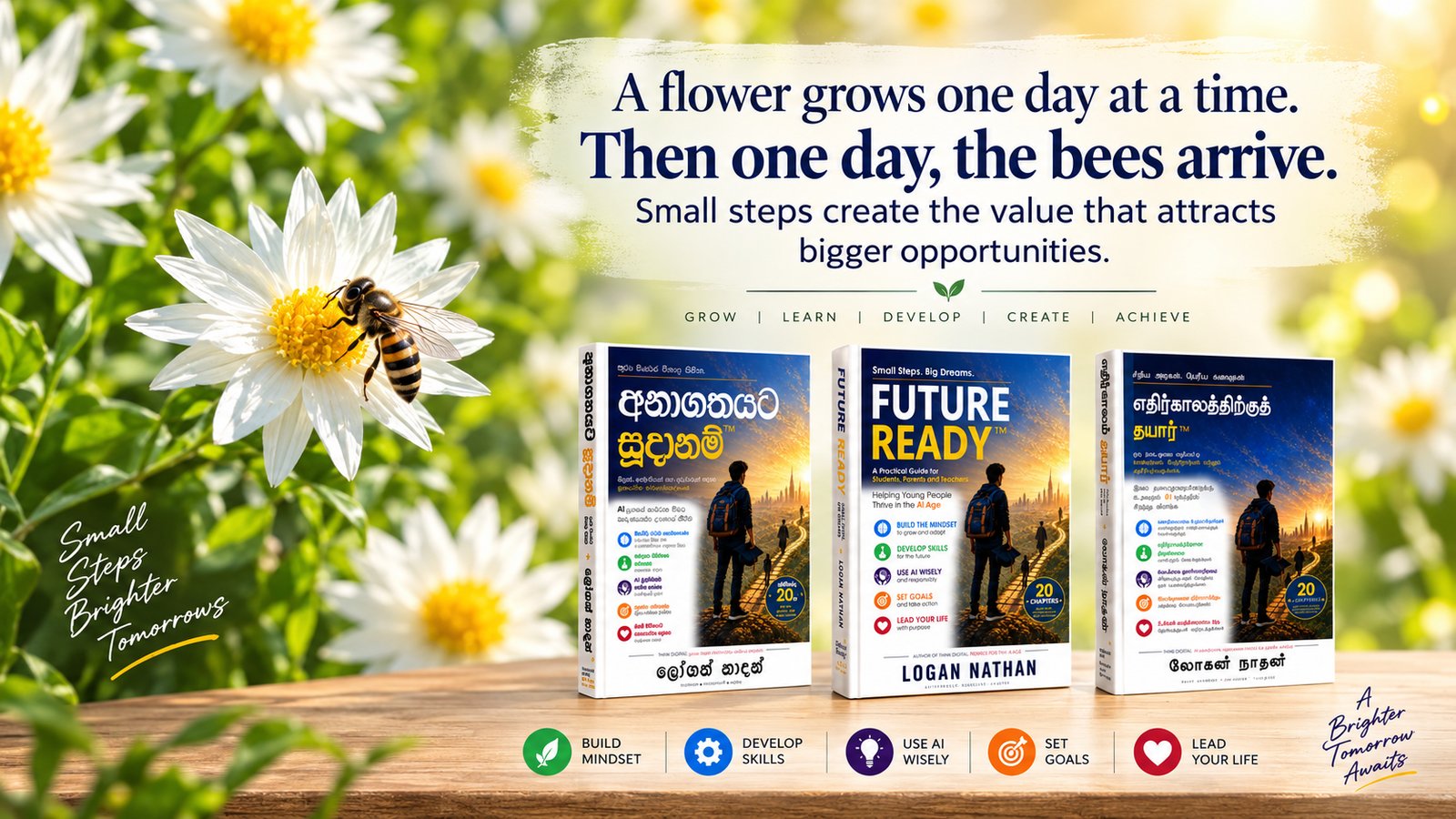
Additionally, building oneself aligns with the philosophy of future readiness, as explored in my upcoming book, FUTURE READY™ — Small Steps. Big Dreams. The book delves into how young people can prepare for unforeseen opportunities by cultivating a robust mindset, essential skills, and positive habits.
My Perspective
Expert in Educational Development and AI Integration
As someone who has observed the shifting sands of both educational and business landscapes, I’ve come to realise that genuine success isn’t hunted down–it is cultivated through dedication and foresight. By focussing on self-development and adaptive skills, one can become adept at not only seizing current opportunities but also being ready for those that emerge unexpectedly in the future.
Progress Through Small, Repeated Actions
A flower doesn’t bloom overnight. It grows one day at a time, a testament to the power of consistent, small steps. This principle applies to our personal and professional development as well.
Consider a teacher guiding students to develop critical thinking. By encouraging daily engagement with challenging problems, the students gradually build the ability to think independently. This preparation is key, as opportunities arise not from a single exam score but from the skills honed over time.
As I see it, “A flower grows one day at a time. Then one day, the bees arrive. Small steps create the value that attracts bigger opportunities.” This quote encapsulates the essence of building steadily to attract meaningful opportunities.
The Role of AI: Enhancing but Not Replacing Human Capability
In today’s digital age, AI offers tools that can accelerate growth, but it should never substitute the human effort, curiosity, and judgement. The key lies in learning to leverage AI while maintaining our unique human capabilities.
For instance, AI can assist students by offering immediate feedback and alternative learning paths. However, the ability to question AI’s outputs, verify information, and apply human judgement remains indispensable. This balanced approach ensures that AI becomes a partner in learning rather than a replacement, a concept further explored in Brian Hernandez’s LinkedIn post.
Mutually Beneficial Relationships: Learning from Nature
The relationship between bees and flowers is a prime example of mutual benefit. The bee receives nectar while the flower gets pollinated. This symbiotic relationship is a powerful metaphor for how we should approach interactions in life and work.
Consider a business owner who focuses not just on sales but on building relationships with customers. By providing genuine value, the business cultivates loyalty and customer advocacy, which in turn attracts more opportunities.
Young people should also focus on building mutually valuable relationships, emphasizing the give-and-take nature of interactions. This approach not only enriches their personal lives but also provides a solid foundation for professional success.
Frequently Asked Questions
Personal growth equips you with skills and character that attract opportunities naturally, whereas chasing success can lead to burnout and superficial achievements.
AI should enhance learning by offering new perspectives and immediate feedback while maintaining the importance of human judgement and critical thinking.
It highlights the value of mutually beneficial relationships, where both parties gain something valuable, leading to lasting and fruitful interactions.
‘FUTURE READY™’ expands on building the mindset and skills required for future opportunities, aligning with the idea of preparing oneself first.
Daily habits such as reading, practicing a skill, or reflecting on goals can lead to significant personal and professional growth over time.