
Share this article

Table of Contents

What Does It Really Mean to Be Future Ready? A Comprehensive Guide for Students in Sri Lanka

What Does It Really Mean to Be Future Ready? A Comprehensive Guide for Students in Sri Lanka

Table of Contents

Key Takeaways

  • Future readiness involves cultivating a mindset of continuous learning and adaptability.

  • Students, parents, and teachers each play a crucial role in fostering future readiness.

  • Logan Nathan’s experience highlights the importance of staying curious and open to change.

Key Answer

To be future ready is to develop a mindset open to change, embrace continuous learning, and acquire adaptable skills, especially within the dynamic landscape of AI and technology.

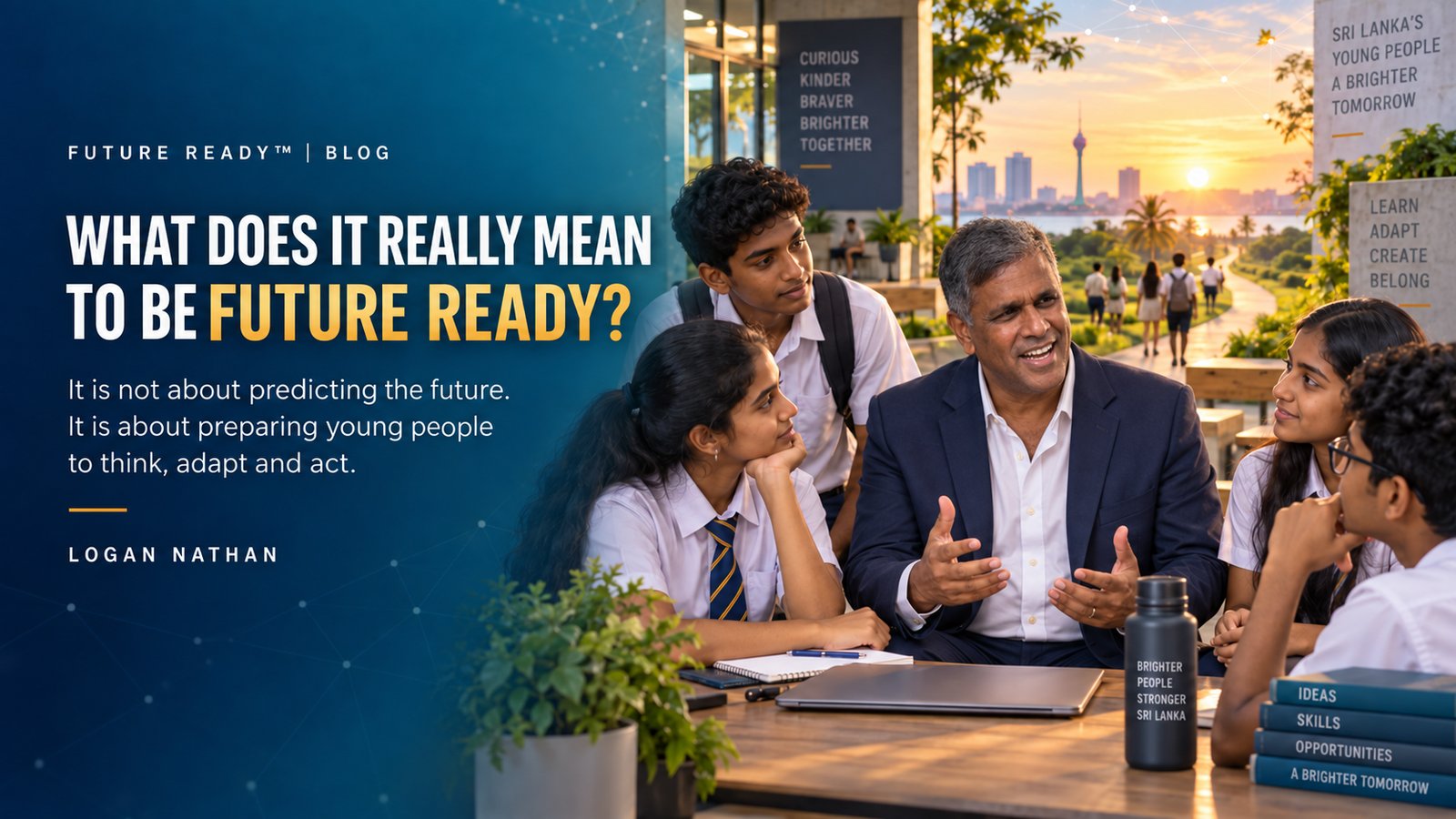
During a conversation I had with students from North to South in Sri Lanka, it became abundantly clear that these young minds already grasp the transformative potential of Artificial Intelligence (AI) in reshaping their future. Yet, their questions veered towards the personal and the profound: ‘How can we prepare? What skills do we need? Can someone from Sri Lanka truly create something impactful for the world?’ These queries highlight the essence of what it means to be truly future ready.

What Does It Really Mean to Be Future Ready? It’s a question that demands a shift from mere technological literacy to a broader educational paradigm. Being future ready is not about mastering every AI tool or predicting every technological trend. Instead, it is about cultivating a mindset that embraces change, fosters continuous learning, and encourages innovation. The reality is, many future careers don’t even exist yet, and the tools we use will continue to evolve. Thus, preparing for the future involves equipping oneself with adaptable skills and a resilient mindset.

The Core of Future Readiness

Being future ready involves several key elements that go beyond technical skills. First and foremost, it requires a commitment to staying curious and continuously learning. In a world where technology evolves rapidly, the ability to learn new concepts and adapt is invaluable.

Moreover, future readiness means thinking independently and asking insightful questions. In the context of AI, where data can sometimes obscure deeper understanding, critical thinking and the ability to ask the right questions become essential. It’s about using AI as a tool, not as a crutch for thought, ensuring that it complements rather than replaces our cognitive functions.

Communication and collaboration are also central to being future ready. The capacity to communicate ideas clearly and work effectively with others can facilitate creativity and problem-solving. These skills are critical, particularly in tech-driven environments where interdisciplinary teams are the norm.

Finally, future readiness is about resilience–the ability to respond to change and recover from setbacks. It’s about making responsible choices online and turning dreams into tangible actions through consistent small steps.

Roles of Students, Parents, and Teachers

Everyone has a role in nurturing future readiness. For students, the journey involves exploration and experimentation. It’s crucial to build projects, learn from mistakes, and develop problem-solving skills. These experiences foster a hands-on approach to learning that is more impactful than merely absorbing information.

Parents play an equally important role by providing guidance that embraces rather than fears technology. Encouraging children to build judgment, confidence, and good digital habits prepares them for the complexities of modern life. Parents should support their children’s curiosity while helping them develop a balanced perspective on the role of technology.

Teachers, meanwhile, are tasked with creating environments that foster critical thinking and problem-solving. It’s not just about teaching students to remember information but nurturing them to become thinkers who can generate innovative solutions. A teacher’s role extends beyond the curriculum; it involves shaping minds that can adapt to future changes and challenges.

Expert Perspective

Education and Technology Expert

In my view, being future ready is less about technological expertise and more about developing the soft skills and adaptability required to thrive in any future scenario. The technology landscape will continually shift, but a resilient mindset can navigate these changes successfully.

Lessons from Logan Nathan's Experience

Reflecting on my own journey over more than four decades in technology, I’ve witnessed significant shifts–from the advent of computers and the internet to the rise of mobile technology, cloud solutions, and now AI. Each of these changes brought new tools and opportunities, but the individuals who thrived were those who remained curious and adaptable.

Remaining future ready, as I have learned, is not about knowing exactly what is on the horizon. It’s about building the mindset and human skills necessary to navigate whatever changes may come. It’s this adaptability that transforms challenges into opportunities. In my career, I have repeatedly seen how those willing to learn, unlearn, and relearn are the ones who move forward.

As we stand on the brink of further advancements in AI and technology, early education in AI becomes crucial. Preparing students to become future innovators means encouraging them to engage with new tools and ideas without fear.

Taking Action Towards Future Readiness

Ultimately, future readiness is an ongoing process of personal and professional development. It requires a proactive approach where students, parents, and educators all work together to cultivate an environment that supports growth and innovation. Encouraging students to take ownership of their learning journey is essential.

I urge each reader to embrace the journey of becoming future ready. Choose one small step you can take today. Maybe it’s learning something unfamiliar, asking a better question, or considering how AI might aid rather than inhibit creativity and problem-solving. These actions, though seemingly small, pave the way for significant growth and transformation.

Explore the idea that the AI age rewards adaptability, a concept that underscores the importance of being prepared for continuous evolution in our professional lives. For further insights, delve into discussions about how the industrial age rewarded capital, whereas the AI age rewards adaptability.

Why Future Readiness Matters

The importance of being future ready cannot be overstated. As technology continues to advance, the skills and attitudes we cultivate today will determine our ability to thrive tomorrow. It’s not about having all the answers but about being ready to ask the right questions and respond effectively to the answers we uncover.

Sri Lanka, with its unique challenges and opportunities, is well-positioned to harness the potential of its youth. By nurturing a culture of curiosity and innovation, we can empower the next generation to make significant contributions on a global stage.

Practical Steps for Achieving Future Readiness

Taking tangible steps towards future readiness involves several practical approaches. Encourage students to engage in projects that promote critical thinking and problem-solving. Schools can integrate technology in ways that challenge students to think independently and creatively.

Parents can introduce their children to resources and experiences that inspire lifelong learning. This might involve encouraging participation in workshops, online courses, or collaborative projects.

For educators, adopting methodologies that go beyond rote memorisation is crucial. Focus on teaching skills that are adaptable to a wide range of scenarios, thereby preparing students not just for exams, but for real-world challenges.

Embracing Change in an Evolving World

In a world that is constantly changing, future readiness is about embracing these changes with open arms. It’s about acknowledging that while we cannot predict every technological development, we can prepare ourselves to be adaptable and resilient in the face of change.

This mindset will allow individuals, especially students, to not only keep up with technological advancements but to excel in leveraging these technologies for meaningful impact. Being future ready means being open to learning, evolving, and contributing positively to society. It’s about turning uncertainty into an opportunity for growth.

Next Steps: Begin Your Journey Today

Starting today, I challenge you to take a step towards your future readiness. Identify an area where you can expand your knowledge or skills. This might be through formal education, personal projects, or simply engaging with new technologies.

Remember, future readiness is not a destination but a journey. As you embark on this path, keep in mind that every small step you take is a building block towards a more resilient and adaptive future. Together, by fostering a mindset of curiosity and adaptability, we can prepare not only for the technologies of tomorrow but for the challenges and opportunities they bring.

Frequently Asked Questions

Essential skills for being future ready include critical thinking, adaptability, effective communication, problem-solving, and the ability to learn continuously.

Future readiness is important because it equips individuals with the mindset and skills needed to adapt to technological changes and succeed in dynamic environments.

Students in Sri Lanka can become future ready by engaging in continuous learning, developing problem-solving skills, and fostering a mindset that is open to change and innovation.

Parents and teachers support future readiness by guiding and nurturing skills like critical thinking, problem-solving, and adaptability, ensuring children are prepared for future challenges.

AI plays a significant role in future readiness by providing tools that can enhance learning and problem-solving. It is important to use AI as a tool to complement, not replace, human thought.